
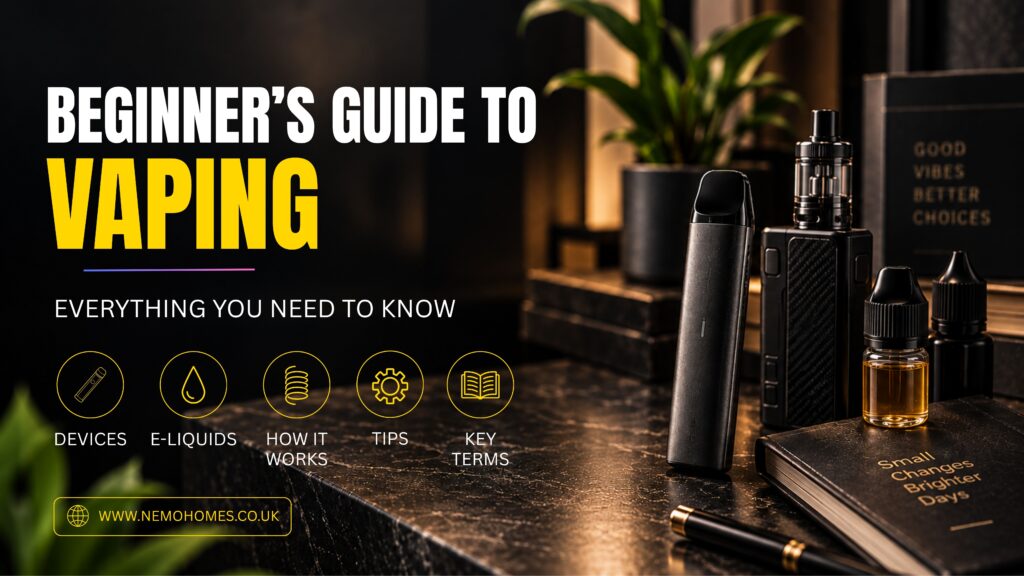
Starting out with vaping can feel a little confusing. There are different types of devices, e-liquids, nicotine strengths and terms to learn, and it can sometimes feel like everyone is speaking a completely different language.
If you’re new to vaping, this guide breaks down the basics in simple terms. We’ll look at how vaping works, what you need to get started, how to choose a device and e-liquid, and some of the common terms you’re likely to come across.
What Is Vaping?
Vaping involves using an electronic device to heat e-liquid, creating an aerosol that can be inhaled. Unlike traditional cigarettes, the process doesn’t involve burning tobacco.
E-liquids are available in different flavours and nicotine strengths, including nicotine-free options.
How Do Vapes Work?
The basic idea is quite simple.
A battery supplies power to a coil, which heats the e-liquid held in a pod or tank. The heated e-liquid produces an aerosol, which is then inhaled through the mouthpiece.
Most devices include several key components:
- Battery – provides the power.
- Coil – heats the e-liquid.
- Pod or tank – holds the e-liquid.
- Wicking material – carries e-liquid to the coil.
- E-liquid – the liquid that is heated.
- Mouthpiece – where you inhale.
- Charging point – used to recharge the device.
In simple terms:
Battery → Coil → E-Liquid + Wick → Aerosol → Mouthpiece
If you’d like a more detailed explanation, see our guide: How Do Vapes Work?.
How Old Do You Have to Be to Vape in the UK?
In the UK, vaping products cannot legally be purchased by anyone under 18. It is also illegal for someone to purchase vaping products on behalf of a person under 18.
Retailers are required to carry out age verification before selling these products.
What Do You Need to Start Vaping?
Once you understand the basics, the equipment itself is fairly straightforward.
You’ll generally need:
A Device
There are several types available, from simple pod systems to more advanced devices with adjustable settings.
E-Liquid
E-liquid comes in a range of flavours and nicotine strengths, so you’ll need to choose one that’s suitable for your device and preferences.
A Charger
Rechargeable devices need to be charged regularly. Most modern devices use USB charging.
Coils
Depending on the device you use, coils may need to be cleaned or replaced periodically. The coil is responsible for heating the e-liquid and producing the aerosol.
Which Vape Is Best for a Beginner?
There’s no single device that’s right for everyone. Your choice will depend on how you want to use it, how much control you want and how portable you need it to be.
Common types include:
- Cig-a-likes – designed to resemble traditional cigarettes.
- Closed pod systems – simple devices using pre-filled pods.
- Vape pens – compact and straightforward.
- Pod mods – offer more features while remaining relatively compact.
- Box mods – larger devices with more adjustable settings.
For someone who wants something simple, portable and easy to maintain, a pod system can be a practical starting point. More experienced users may prefer devices with greater control over power and other settings.
Choosing the Right E-Liquid
Choosing an e-liquid isn’t just about picking a flavour you like. You also need to consider the device you’re using, the PG/VG ratio, your vaping style, nicotine strength and how often you use your device.
The main things to look at are:
- PG/VG ratio
- Device compatibility
- Vaping style
- Typical usage
- Budget
What Does PG/VG Mean?
PG stands for Propylene Glycol, while VG stands for Vegetable Glycerin.
The balance between the two can affect flavour, throat hit, vapour production and how well the e-liquid works with your device.
In general, higher-PG liquids are commonly associated with smaller devices, while higher-VG liquids are generally used with higher-powered devices designed to produce more vapour.
Check Your Device Compatibility
Different devices are designed to work with different types of e-liquid.
Using an unsuitable liquid can contribute to issues such as poor performance, leaking, overheating or burnt coils. Higher-VG liquids are thicker and are generally better suited to devices designed to handle them.
MTL vs DTL: What's the Difference?
Two terms you’ll hear regularly are MTL and DTL.
Mouth-to-Lung (MTL) means drawing the aerosol into your mouth first before inhaling it into your lungs. It is similar to the way someone would draw on a traditional cigarette.
Direct-to-Lung (DTL) involves inhaling the aerosol directly into the lungs.
The best option depends on your device and personal preference.
What Nicotine Strength Should You Choose?
E-liquid nicotine strength is normally shown in mg/mL or as a percentage.
In the UK, nicotine-containing e-liquids are generally available up to a maximum strength of 20mg/mL. The appropriate strength can vary depending on factors such as previous smoking habits, personal preference and the device being used.
If you’re unsure about nicotine strength, it’s worth taking time to understand the different options rather than simply choosing the highest available strength.
Don't Forget Your Budget
The cost of vaping can vary depending on the device and e-liquids you choose.
If you use e-liquid regularly, larger bottles can sometimes offer better value. Shortfills are larger nicotine-free bottles that leave space for nicotine to be added where appropriate.
It’s also worth considering the long-term cost of replacement coils, pods, e-liquid and other consumables when comparing devices.
Common Vaping Terms Explained
The terminology can seem confusing at first, so here’s a quick reference:
Term
Atomiser – The part containing the coil and wick, and sometimes the e-liquid reservoir.
Coil – The component that heats the e-liquid.
Drip Tip – Another name for the mouthpiece.
Dry Hit – A harsh or burnt taste caused when the coil isn’t properly saturated.
E-Liquid – The flavoured liquid heated by the device.
Freebase – A form of nicotine commonly used in e-liquids.
Mods – Larger, more advanced devices with adjustable settings.
MTL – Mouth-to-Lung vaping.
DTL – Direct-to-Lung vaping.
Nic Salts – A type of nicotine used in e-liquids.
Ohm – A measurement of electrical resistance.
Pod System – A device that uses small replaceable or refillable pods.
RBA – A rebuildable atomiser that allows users to build their own coils.
Shortfill – A larger nicotine-free e-liquid bottle with room for nicotine to be added.
Sub-Ohm – A coil with a resistance below one ohm.
Tank – The part of a device that holds e-liquid.
VG – Vegetable Glycerin, a thicker e-liquid ingredient associated with vapour production.
PG – Propylene Glycol, a thinner e-liquid ingredient associated with flavour and throat hit.
Wattage – The power level at which a device operates.
These are some of the most common terms you’ll encounter as you learn more about vaping.
Final Thoughts
Getting started with vaping doesn’t have to be complicated. Once you understand the basics of how devices work, the different device types, e-liquid ratios and nicotine strengths, it becomes much easier to make sense of the terminology.
The key is to choose a device and e-liquid that are compatible with each other and suited to how you intend to use them.
And if you’re new to the subject, don’t worry about learning everything at once. Start with the basics, understand your device, and build your knowledge from there.
Looking for more helpful guides? Explore our other vaping guides and tips at Nemo Homes.