
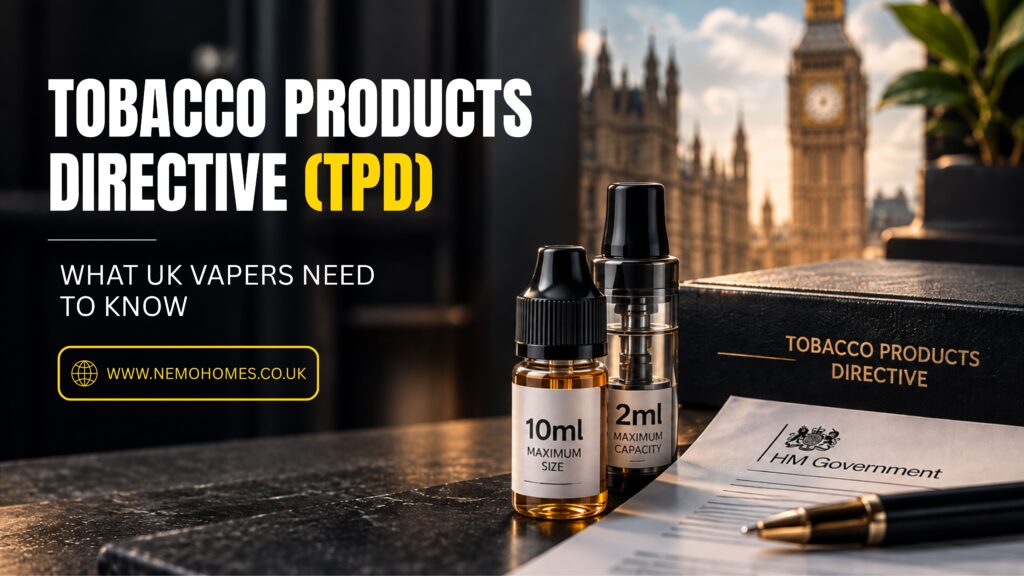
If you’ve spent any time looking at vape products in the UK, you’ve probably come across the term TPD. You may also have noticed things like 10ml e-liquid bottles, 2ml tanks and nicotine warnings on packaging.
These aren’t just choices made by manufacturers. They’re connected to regulations designed to set standards for nicotine-containing vaping products.
Here’s a simple explanation of what TPD means, how it relates to UK vaping rules and what the requirements mean for consumers.
What Does TPD Mean?
It is European Union legislation covering tobacco and related products, including nicotine-containing e-cigarettes and e-liquids.
In the UK, the relevant rules were implemented through the Tobacco and Related Products Regulations (TRPR), which came into effect in May 2016.
The regulations cover areas such as how vaping products are manufactured, packaged and presented to consumers.
For everyday vapers, the important thing to understand is that these rules set standards for the vaping products that can legally be supplied.
Why Were TPD Regulations Introduced?
The regulations were introduced to establish standards for the safety and quality of e-cigarettes and refill containers.
They also aim to make sure consumers receive appropriate information about the products they’re buying and to help protect children from taking up these products.
This is why compliant vape products come with specific packaging, warnings and product information.
What Are the TPD Requirements for Vapes?
One of the most noticeable effects of the regulations is that they place limits and requirements on certain nicotine-containing vaping products.
For consumers, some of the key requirements include:
- E-cigarette tanks are limited in capacity.
- Nicotine-containing refill containers have maximum size limits.
- Packaging must include appropriate health warnings.
- Consumers must be provided with relevant product information.
- Products must meet minimum safety and quality requirements.
These rules are why vape packaging can look quite different from ordinary consumer products.
Why Are Nicotine E-Liquid Bottles Usually 10ml?
One of the most recognisable TPD-related rules is the limit placed on nicotine-containing refill bottles.
Nicotine-containing e-liquid refill containers are subject to a maximum 10ml capacity.
That’s why you’ll often see nicotine e-liquids sold in small 10ml bottles.
Larger bottles, often known as shortfills, are generally supplied without nicotine, which is why you may see them in much larger sizes.
Why Are Vape Tanks Limited to 2ml?
The regulations also place a capacity limit on certain tanks and cartridges used with electronic cigarettes.
These are limited to a maximum capacity of 2ml.
This is one reason many vape kits and pod systems sold for the UK market use 2ml tanks or pods.
What About Nicotine Strength?
Nicotine-containing e-liquid is also subject to a maximum nicotine concentration.
Under the regulations, nicotine-containing e-liquid cannot exceed 20mg/ml.
You might also see this displayed as 2% nicotine on some products.
Different strengths below this limit are available, allowing adult consumers to choose an option appropriate for their preferences.
Why Do Vape Products Have Warning Labels?
If you’ve bought a nicotine-containing vape product, you’ve probably noticed warnings on the packaging.
These aren’t simply added by individual manufacturers. Packaging requirements form part of the regulations surrounding nicotine products.
The aim is to make important information clearly available to consumers, including appropriate health warnings and information about the product.
Does TPD Cover Every Vaping Rule?
Not necessarily.
It’s useful to separate product regulations from other rules surrounding vaping.
The TPD covers areas relating to e-cigarettes and nicotine-containing e-liquids, including product safety, quality and consumer information.
Other areas can be governed by separate domestic legislation and policies. These can include matters such as age restrictions, advertising, sales and rules about where vaping is permitted.
So, being TPD-compliant doesn’t automatically tell you everything about where or how a vaping product can be sold, promoted or used.
What Does TPD Compliance Mean for Consumers?
For an adult buying vaping products, these regulations mostly work in the background.
You’ll see their effects through things such as:
2ml tanks and pods
Capacity limits affect the size of many products available on the UK market.
10ml nicotine e-liquid bottles
Nicotine-containing refill bottles are limited in size.
Maximum nicotine concentrations
Nicotine-containing e-liquid is subject to strength limits.
Product information and warnings
Packaging must provide required information to consumers.
Safety and quality requirements
Products must meet the applicable regulatory standards before being supplied.
Understanding these basics can make some of the terminology and packaging you see when shopping for vaping products much easier to understand.
TPD and TRPR: What's the Difference?
This is where the terminology can become confusing.
TPD refers to the European Union’s Tobacco Products Directive.
TRPR refers to the UK’s Tobacco and Related Products Regulations.
You’ll still regularly hear people in the vaping industry use terms such as “TPD compliant”, which is why both terms are useful to recognise.
For someone simply trying to understand vaping regulations, you don’t need to memorise all the legal terminology. The important thing is knowing that vaping products sold in the UK are subject to specific requirements covering areas such as capacity, nicotine concentration, packaging and product standards.
Final Thoughts
TPD regulations might sound complicated, but their effect on everyday vaping products is relatively easy to recognise.
They’re behind many familiar features of the UK vaping market, including 2ml tank limits, 10ml nicotine e-liquid bottles, nicotine strength limits and required product warnings.
For adult consumers, understanding these basics can make it easier to know why products are packaged and designed the way they are.
And because vaping regulations can change over time, it’s always worth checking the latest official UK guidance if you’re unsure about a particular requirement.
Looking for more straightforward vaping guides? Explore our latest guides and tips at Nemo Homes.