
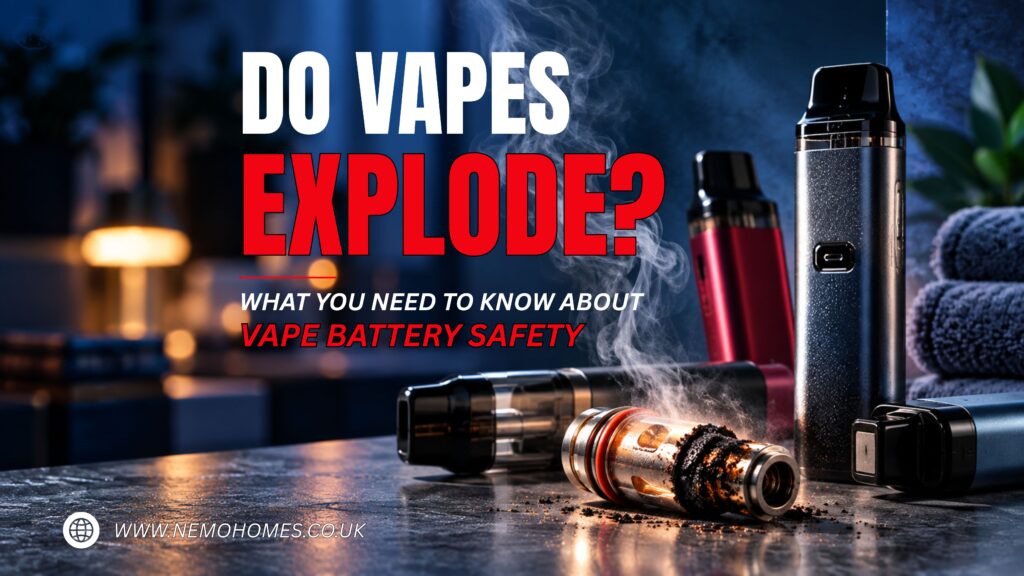
You may have seen headlines or videos about vapes exploding and wondered whether it’s something you should be worried about.
The short answer is that a vape can overheat or experience a battery failure in rare cases. Like smartphones, laptops and many other rechargeable electronics, vape devices commonly use lithium-ion batteries. These batteries are designed to store a lot of energy in a small space, but they need to be used, charged and stored correctly.
Many reported incidents involving vape batteries have been associated with issues such as unsuitable chargers, damaged batteries, improper storage, modifications or incorrect handling.
So rather than worrying about whether a vape can explode, it’s more useful to understand why battery problems can happen and what you can do to reduce the risk.
Can Disposable Vapes Explode?
Disposable vapes generally operated at lower power levels than many larger rechargeable vape devices, so battery-related incidents were uncommon.
However, any device containing a lithium-ion battery can potentially develop a problem. Physical damage, excessive heat, moisture or improper handling could increase the risk of the battery overheating or failing.
Disposable vapes are now banned from sale in the UK. Adult vapers instead have reusable and rechargeable alternatives available, including pod-based devices.
Whatever type of rechargeable device you use, always follow the manufacturer’s instructions for charging, storage and everyday use.
Why Can a Vape Battery Fail?
A vape contains electronic components and, in most rechargeable devices, a lithium-ion battery.
Problems can occur when that battery is damaged, incorrectly charged or otherwise misused.
Previous research from the US Fire Administration has examined incidents involving electronic cigarettes and found that charging was one situation in which failures occurred. However, battery incidents weren’t limited to charging alone.
Other potential factors include:
- Using an unsuitable charger
- Using poor-quality or uncertified replacement batteries
- Physically damaging the device or battery
- Modifying a device
- Exposing the battery to extreme temperatures
- Allowing exposed battery terminals to contact metal objects
- Continuing to use a battery or device that appears damaged
Loose removable batteries require particular care. If an unprotected battery is carried in a pocket or bag alongside objects such as keys or coins, the metal can make contact with its terminals and potentially cause a short circuit.
That’s why loose batteries should always be transported in a suitable protective case.
Are Vape Explosions Common?
Serious battery failures are not something that should be considered normal behaviour for a vape.
However, the fact that incidents are uncommon doesn’t mean battery safety should be ignored.
Vapes are electronic devices, and the same basic precautions you’d take with other lithium-ion-powered products also matter here. The safest approach is to use reputable products, follow the manufacturer’s instructions and stop using a device if something doesn’t seem right.
Vape Battery Safety: Simple Steps to Follow
Most battery safety comes down to a few sensible habits.
Follow the Manufacturer’s Instructions
Different devices can have different charging requirements, operating ranges and safety features.
Even if you’ve been vaping for years, read the instructions supplied with a new device. Don’t assume that the charging requirements for one vape automatically apply to another.
Use the Recommended Charging Equipment
A cable fitting into your vape doesn’t necessarily mean every charger or power source is appropriate for it.
Use the charging equipment and power specifications recommended by the manufacturer. This helps avoid problems caused by incompatible voltage, current or charging equipment.
If you’re unsure what charger is suitable, check the device manual or manufacturer’s guidance before charging.
Choose Reputable Devices and Batteries
Quality matters when you’re dealing with lithium-ion batteries.
Buy vaping devices, replacement batteries and charging equipment from reputable suppliers and avoid questionable or counterfeit batteries.
If your device has a built-in battery, don’t attempt to open the device or replace the battery yourself unless the manufacturer specifically designed it to be user-serviceable.
Check Your Vape for Damage
Take a quick look at your device from time to time.
Stop using it if you notice problems such as significant physical damage, a damaged charging port, battery swelling or unusual overheating.
A device that has been dropped heavily, crushed or exposed to water may also need to be checked or replaced rather than simply continuing to use it as normal.
Don't Leave Your Vape Charging Unattended
Avoid leaving your vape charging for unnecessarily long periods, particularly overnight while you’re asleep.
Keep an eye on the device while it’s charging and disconnect it according to the manufacturer’s instructions once charging is complete.
Charging your vape on a stable surface away from flammable materials is also a sensible precaution.
If a device becomes unusually hot while charging, disconnect it safely if possible and stop using it until you’ve checked the manufacturer’s guidance.
Keep Your Vape Away From Extreme Temperatures
Lithium-ion batteries don’t respond well to extreme heat or cold.
Avoid leaving your vape somewhere that can become very hot, such as inside a parked car on a sunny day or directly beside a heat source.
A cool, dry place away from direct heat and moisture is generally a better option for storage.
Always check the operating and storage temperature recommendations provided for your particular device.
Be Careful When Travelling With a Vape
Travelling can expose your device to knocks, pressure and other potential damage.
Rather than throwing your vape loosely into a bag, store it securely so that it isn’t crushed or damaged by other items.
Removable batteries should be kept in dedicated protective cases and never carried loose alongside coins, keys or other metal objects.
If you’re flying, check the latest airline and airport rules before travelling, as restrictions can apply to vaping devices and lithium-ion batteries.
What Should You Do If Your Vape Gets Very Hot?
A vape may become slightly warm during normal use or charging, but unusual or excessive heat shouldn’t be ignored.
If your device becomes unexpectedly hot, behaves strangely, appears damaged or develops another unusual problem, stop using it.
Don’t continue charging or using a device simply to see whether the problem disappears.
Check the manufacturer’s safety instructions and replace the device or battery where appropriate.
Vape Battery Safety: Quick Checklist
For safer everyday use:
- Follow the instructions supplied with your vape.
- Use suitable charging equipment recommended for your device.
- Don’t leave your vape charging unattended or overnight.
- Keep the device away from extreme heat and cold.
- Don’t use damaged or swollen batteries.
- Never carry loose removable batteries alongside metal objects.
- Use protective storage when travelling.
- Don’t modify batteries or devices unless specifically designed for it.
- Buy devices and batteries from reputable suppliers.
- Stop using a device if it becomes unusually hot or appears damaged.
Final Thoughts
So, can vapes explode?
Battery failures are possible, just as they are with other products powered by lithium-ion batteries, but serious incidents are rare. Problems can be associated with incorrect charging, damaged or poor-quality batteries, unsuitable storage, modifications and other forms of improper use.
The important thing is not to become complacent about battery safety.
Use your vape as the manufacturer intended, charge it correctly, protect it from damage and extreme temperatures, and don’t ignore warning signs such as excessive heat or physical damage.
A few simple precautions can go a long way towards keeping your device in good condition and reducing avoidable battery risks.
Vaping products containing nicotine are intended for adults and are not risk-free. Nicotine is addictive.