
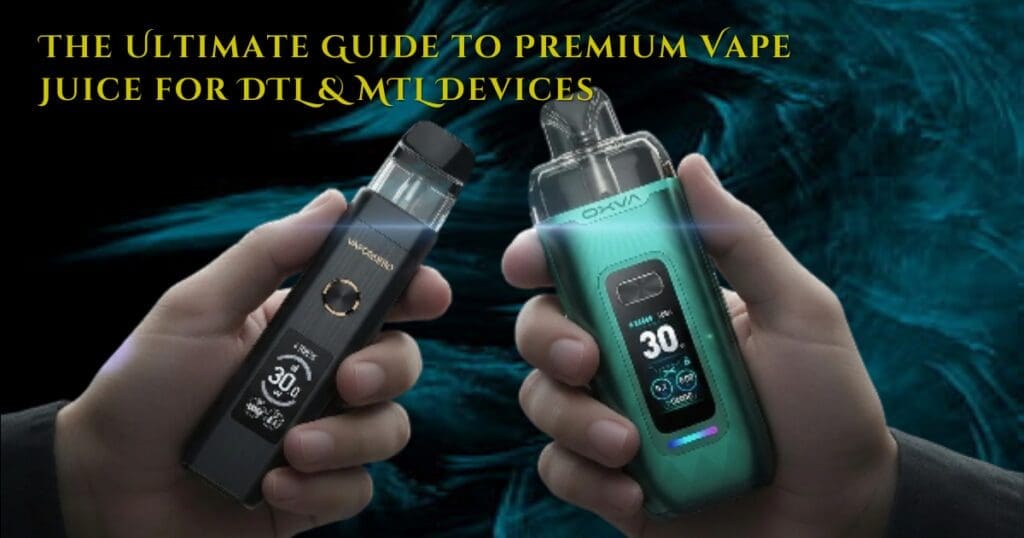
If you’ve ever wondered why some e-liquids produce huge clouds while others deliver a stronger nicotine hit with a tighter draw, the answer often lies in the type of vape liquid and how it’s matched to your vaping style. Choosing the right e-liquid for your setup can dramatically improve flavour, vapour production, and overall satisfaction.
Two of the most common vaping styles are DTL (Direct-to-Lung) and MTL (Mouth-to-Lung). Each style requires different e-liquid ratios, nicotine strengths, and device settings. Understanding these differences can help you choose the right premium vape juice and get the best possible experience from your device.
In this guide, we’ll break down the differences between DTL and MTL vaping, explain the importance of VG/PG ratios, and show you how to choose premium e-liquids that suit your device and preferences.
Understanding DTL vs MTL Vaping

Before selecting an e-liquid, it’s important to understand the two main vaping styles and how they affect performance and flavour.
Mouth-to-Lung (MTL)
MTL vaping mimics the way most people smoke traditional cigarettes. Vapour is first drawn into the mouth and then inhaled into the lungs.
This style is common among beginners and former smokers because it provides a familiar sensation and stronger throat hit.
Typical characteristics of MTL vaping include:
- Tight airflow similar to a cigarette
- Lower wattage devices (usually 10–20W)
- Higher resistance coils (0.8–1.2 ohm or higher)
- Smaller vapour clouds
- Higher nicotine strength
MTL setups are commonly used with pod systems and starter kits. Because vapour production is lower, higher nicotine concentrations are typically used to deliver a satisfying hit.
Direct-to-Lung (DTL)
DTL vaping involves inhaling vapour directly into the lungs in one smooth breath, similar to taking a deep inhale.
This method is popular with experienced vapers who enjoy large vapour clouds and intense flavour.
Typical characteristics of DTL vaping include:
- Wide open airflow
- Sub-ohm coils (below 1.0 ohm)
- Higher wattage devices (40W and above)
- Large vapour production
- Lower nicotine strength
DTL setups often use powerful vape mods and sub-ohm tanks designed to handle thicker e-liquids.
Understanding PG and VG in E-Liquids
Every vape liquid is made from two primary base ingredients: propylene glycol (PG) and vegetable glycerin (VG). The ratio between these two ingredients plays a major role in how the e-liquid performs.
Propylene Glycol (PG)
PG is a thinner liquid that carries flavour extremely well and produces a noticeable throat hit. Because of its thin consistency, it works well in smaller coils and lower-power devices.
Key characteristics of PG include:
Strong flavour delivery
Sharper throat hit
Thinner consistency
Ideal for MTL vaping
Vegetable Glycerin (VG)
VG is thicker and produces dense vapour clouds. It provides a smoother inhale and is commonly used in high-power sub-ohm setups.
Key characteristics of VG include:
Thick consistency
Smooth inhale
Large vapour clouds
Ideal for DTL vaping
Best E-Liquid Ratios for MTL Vaping
MTL devices work best with thinner e-liquids that wick easily through smaller coils.
Recommended VG/PG ratios for MTL include:
50/50 VG/PG
60/40 PG/VG
70/30 PG/VG
These ratios allow the coil wick to absorb e-liquid efficiently, preventing dry hits and improving flavour clarity.
Nicotine Strength for MTL
Because vapour production is lower, MTL vapers typically use higher nicotine strengths.
Common options include:
6mg to 12mg freebase nicotine
10mg to 20mg nicotine salts
Nicotine salts are particularly popular with pod systems because they provide smoother inhalation even at higher nicotine levels.
Best E-Liquid Ratios for DTL Vaping
DTL vaping requires thicker liquids that can produce dense clouds without causing harsh throat hits.
Recommended VG/PG ratios for DTL include:
70/30 VG/PG
80/20 VG/PG
Max VG
Higher VG content ensures smoother inhalation when using high-wattage devices.
Nicotine Strength for DTL
Because DTL produces significantly more vapour, lower nicotine levels are recommended.
Typical strengths include:
0mg for flavour chasing
3mg for light nicotine use
6mg for moderate nicotine intake
Higher nicotine levels can feel extremely harsh when used with DTL devices.
How to Identify a High-Quality Premium E-Liquid
Not all vape juices are created equal. Premium e-liquids typically stand out due to ingredient quality, flavour complexity, and manufacturing standards.
High-Quality Ingredients
Premium brands often use:
Pharmaceutical-grade PG and VG
Food-grade flavourings
Lab-tested nicotine
This results in cleaner vapour and better flavour consistency.
Balanced Sweetness
Excessive sweeteners can shorten coil life by leaving residue buildup on the heating element.
Premium e-liquids aim to balance sweetness while maintaining coil longevity.
Complex Flavour Profiles
High-end vape juices often contain layered flavours that develop during inhalation and exhalation.
For example:
Vanilla custard with caramel notes
Mango blended with pineapple and cooling ice
Coffee with chocolate and hazelnut undertones
These flavour combinations create a more refined vaping experience.
Tips for Getting the Best Performance from Your E-Liquid
Choosing the right e-liquid is only part of the equation. Proper vaping habits can also improve performance.
Match the e-liquid to your device.
Using high VG liquid in an MTL device may cause poor wicking or dry hits.
Use the correct wattage range.
Running coils too hot can burn e-liquid and damage the wick.
Avoid chain vaping.
Allow time between puffs so the wick can absorb more liquid.
Store e-liquids properly.
Keep bottles sealed and away from direct sunlight to preserve flavour.
FAQs: Premium E-Liquids for DTL & MTL
Q1: Can I use the same e-liquid for both MTL and DTL devices?
A: It depends on the VG/PG ratio. 50/50 liquids are usually designed for MTL, while 70% VG or higher works best for DTL.
Q2: Which type of nicotine is better for beginners?
A: Nicotine salts are often recommended for beginners using pod systems because they provide smoother inhalation.
Q3: Why does my high VG liquid not work well in my pod device?
A: High VG liquids are thicker and may not wick properly in smaller MTL coils.
Q4: Do premium e-liquids last longer than cheaper ones?
A: In many cases, yes. Higher-quality ingredients and balanced sweeteners can extend coil life.
Q5: Can e-liquid affect coil lifespan?
A: Yes. Dark or heavily sweetened liquids tend to leave more residue on coils.
Final Thoughts
Choosing the right premium e-liquid for DTL or MTL vaping can make a huge difference in flavour, vapour production, and device performance.
MTL vapers should look for thinner liquids with higher nicotine strengths, while DTL users typically benefit from thicker high-VG e-liquids designed for sub-ohm devices.
By understanding the differences between VG and PG ratios, nicotine strengths, and flavour profiles, you can select the perfect e-liquid for your setup and enjoy a smoother, more satisfying vaping experience.
With the right combination of device, coil, and premium vape juice, every puff can deliver the flavour, vapour, and satisfaction you’re looking for.